
Water Damage Restoration in Phoenix
Published August 4, 2026 · Last reviewed August 21, 2026 · Water Fighters Restoration
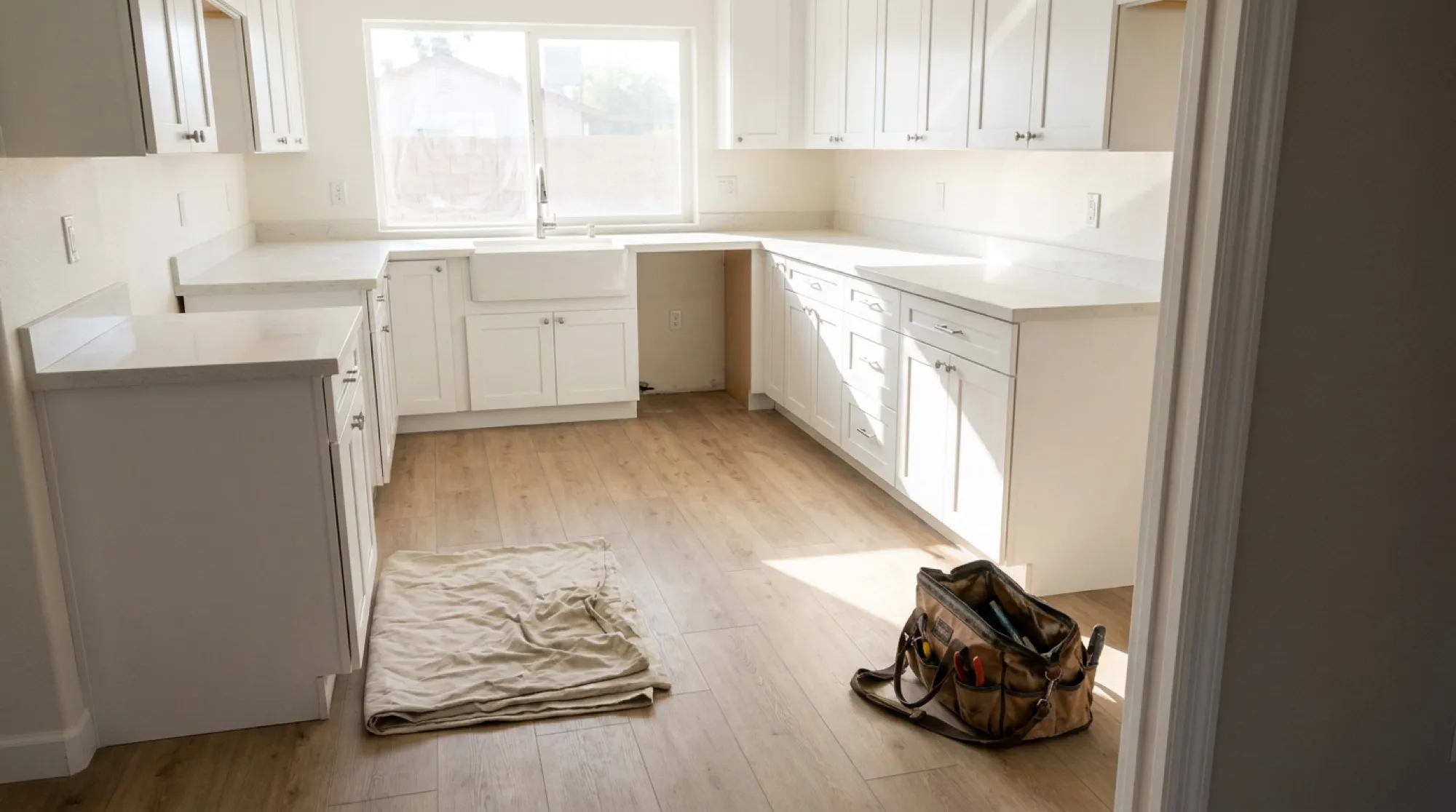
The emergency is over. The water is out, the fans have run, and now you're looking at cut-open drywall, missing baseboards, a kitchen with no lower cabinets — and a question nobody answered: who puts it all back?
For most restoration companies, the honest answer is "somebody else." They dry the structure, collect the mitigation check, and hand you a list of contractors. You start over — new estimates, new schedules, a contractor who wasn't there when the damage happened arguing with an adjuster about what the damage was.
Water Fighters was built to end that handoff. We're the crew that shows up the night it floods and the crew that hangs the last cabinet door.
The One-Team Difference
Mitigation and rebuild under one roof changes how the whole job goes, in three specific ways.
Nothing gets lost in the handoff. The people who rebuild your kitchen are working from the moisture maps, photos, and demo notes made by their own crew — not interpreting a stranger's paperwork. Every cut we make during dry-out is made knowing we're the ones who'll repair it, so we cut clean, straight, and no bigger than the meters require.
The insurance file stays whole. One company, one scope, one estimate that covers extraction through finish work. Adjusters get a single consistent story instead of a mitigation invoice and a rebuild bid that don't match, which is where claims stall.
One schedule, one phone number. No gap between "the structure is dry" and "the contractor can start in six weeks." Rebuild materials get ordered while the drying equipment is still running.
How Restoration Actually Works
Every job moves through the same four phases, and you'll always know which one you're in.
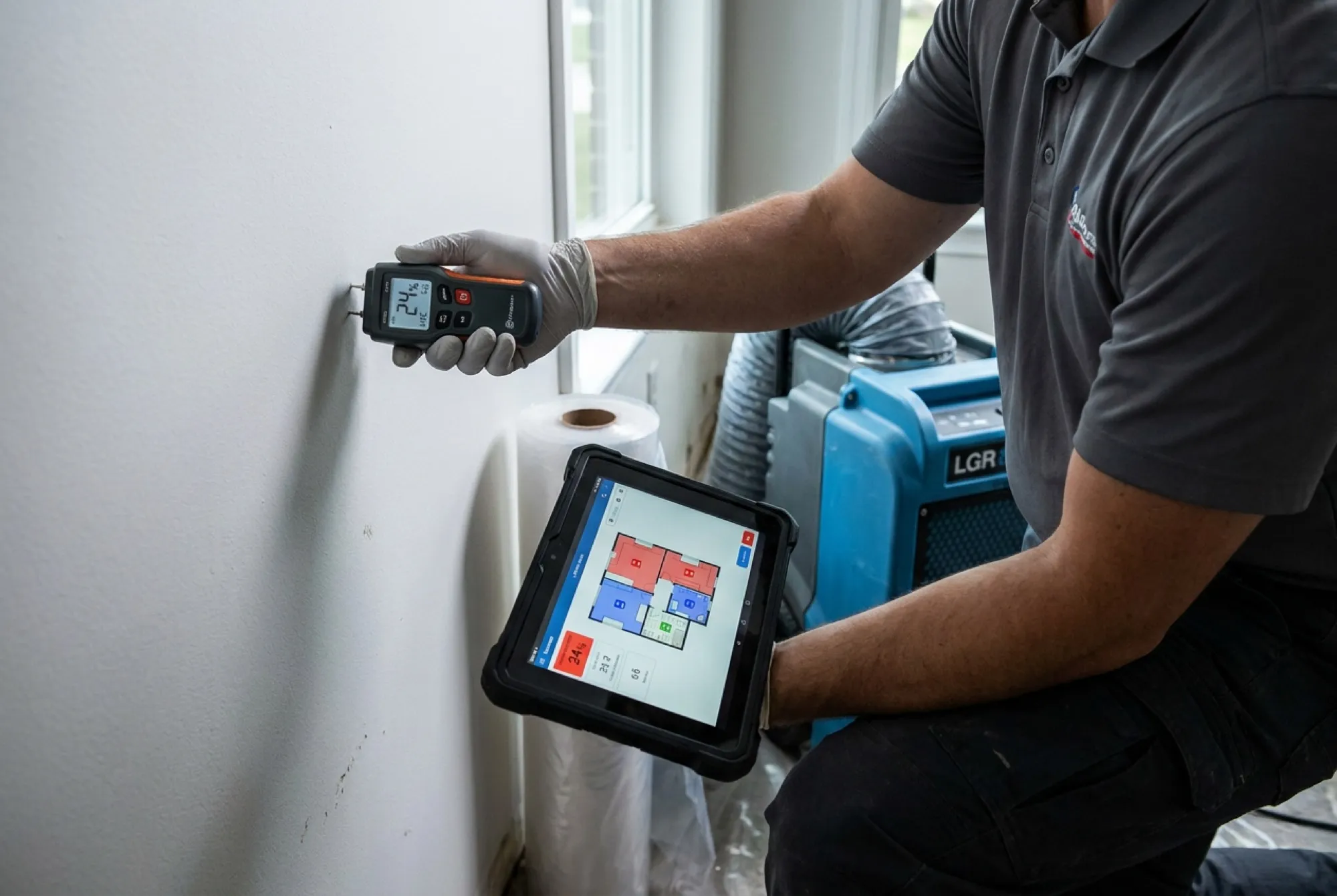
Assessment and documentation. Moisture readings on every affected surface, thermal imaging where water hides, photos of everything. This file drives both the drying plan and the insurance claim — it's the same estimate your adjuster receives, line for line.
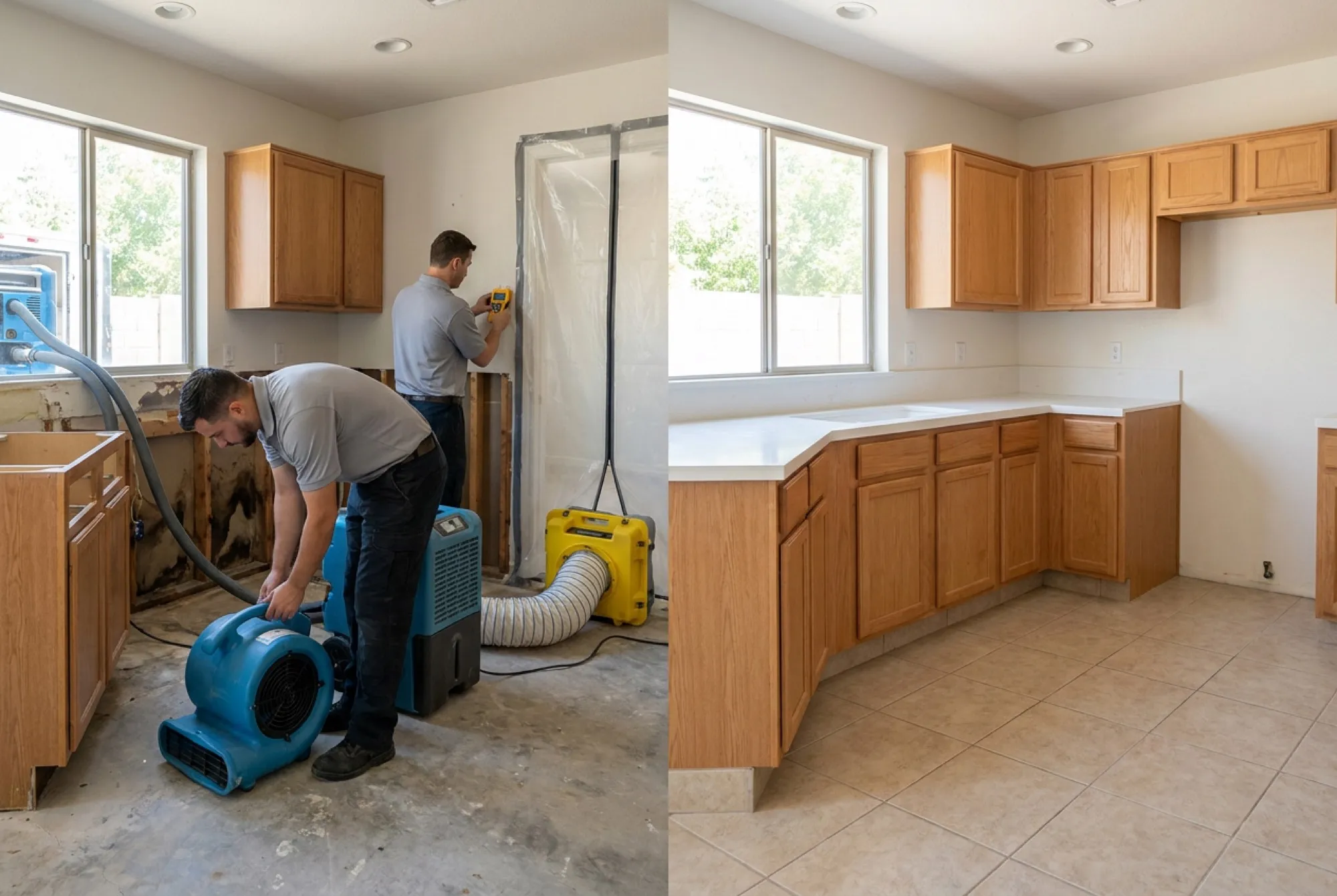
Structural drying. Air movers and dehumidifiers placed to the moisture map and verified with daily readings against IICRC S500 drying standards. We remove only what can't be saved. Wet pad goes; hardwood often doesn't have to. The meters decide, not habit.
Repairs. Drywall, texture-matched to your existing walls (Phoenix homes are almost all orange peel or knockdown — a bad patch shouts). Baseboards, paint, flooring, cabinet boxes. Licensed, and inspected against the scope before anyone calls it done.
Finish and walkthrough. You walk every room with us against the original scope sheet. Anything that isn't right gets made right before we consider the job closed. The 100% satisfaction guarantee isn't a slogan; it's the last step of the process.
What's Included — and What Isn't
The scope covers everything from extraction to finish: water removal, structural drying with daily monitoring, demolition of unsalvageable materials, antimicrobial treatment, drywall and texture, paint, trim, flooring, and cabinet replacement. Contents handling — moving, blocking, and protecting your furniture — is part of the job, not an add-on.
What's not included: plumbing repair itself. We locate the failure and coordinate directly with your plumber (or recommend one we trust), but the pipe fix is licensed plumbing work and we stay in our lane. We also don't do roof replacement — if a monsoon storm opened your roof, we tarp, dry the interior, and work alongside your roofer. And if testing reveals mold beyond the flood cuts, that becomes a documented mold remediation scope with its own containment protocols, priced before work continues — never a surprise line item after.
Why Phoenix Homes Flood
Desert houses have their own failure patterns, and knowing them is half of finding the leak fast.
Slab leaks lead the list. Thousands of Valley homes have copper or polybutylene supply lines running under the slab, and homes built before 1995 with polybutylene are living on borrowed time — the material becomes brittle and fails without warning. Water heaters in garages and interior closets let go around year ten. AC condensate lines clog in June and overflow through ceilings, which is how a cooling system floods a hallway in a place with no rain. And then the rain does come: monsoon season drives water through roof penetrations, window seams, and doors that faced west for thirty summers.
We've dried all of it, in every part of the Valley, for years. When you describe what you're seeing on the phone, we usually know where to look before we arrive.
What It Costs & How Insurance Works
Restoration pricing follows the damage, and the spread is genuinely wide: a single-room loss with drying and rebuild is a different job from a multi-room loss with kitchen or flooring replacement. The free estimate puts a real number on your actual damage — and it's the same estimate your insurance company receives, so what the adjuster reviews is what you saw.
Sudden water losses are covered under most homeowner policies. We bill carriers directly, speak Xactimate (the estimating platform adjusters use), and supply the documentation that keeps claims moving. Your job is picking the new cabinet color. If you're paying out of pocket, financing is available and the estimate is still free.
Common Questions
Do you handle the insurance claim for me?
We handle the documentation, the direct billing, and the adjuster communication. You file the claim (it's your policy), and we supply everything the carrier needs from there — photos, moisture logs, and a scope written in the same format adjusters use.
Can you match my wall texture and paint?
Yes. Texture matching is standard on every drywall repair — orange peel, knockdown, or smooth. A patch you can find afterward is a patch we redo.
Do I have to use the restoration company my insurance suggests?
No. In Arizona, the choice of contractor is yours. Carriers may offer a preferred vendor, but you're free to hire the company you trust — and the estimate we provide is in the exact format your carrier processes.
How long does the whole process take, start to finish?
Drying runs three to five days. Rebuild depends on scope — baseboards and paint can finish within a week of dry-out; a kitchen with cabinet lead times runs three to six weeks. You get a schedule at the estimate, and one point of contact the whole way.
Is the water damage dangerous to stay around?
Category 1 water (clean supply lines) usually allows you to stay home while equipment runs, though it's loud. Contaminated water or sewage changes the answer, and we'll tell you straight during the assessment.
Can hardwood floors be saved?
Often, if drying starts fast. Specialty drying mats pull moisture through the boards before cupping sets permanently. Floors that sat wet for days are usually past saving — another reason the first call matters.
What if mold has already started behind the walls?
It gets contained and remediated properly before rebuild — documented, priced, and approved first. Sealing mold behind new drywall is the one shortcut we will never take. More on our process at mold testing and remediation.
Do you do the rebuild even if another company did the dry-out?
Yes. We'll verify the structure is actually dry (our meters, not their invoice), then scope and complete the rebuild.
What does the 100% satisfaction guarantee actually mean?
The final walkthrough ends when you say it does. Items that don't match the scope get corrected at our cost before the job closes.
Do I need to replace my carpet after it got soaked?
Often no — carpet itself is frequently salvageable if the water was clean and extraction starts fast. The pad underneath is a different story: it's a sponge, it's inexpensive relative to everything around it, and it comes out almost every time. Saving carpet is mostly a speed question; saving pad is rarely worth attempting.
The category decides first: clean supply-line water leaves carpet in play; washing-machine discharge is borderline; sewage or storm water ends the conversation — that carpet leaves regardless of how it looks. When salvage is on the table, the mechanics are float-drying (air driven underneath while the pad is gone), then re-stretching, because wet carpet relaxes off its tack strip. The failure modes we're watching for: delamination, where the backing separates from the fiber and the carpet is done, and browning stains wicking up from jute backing that sat wet. The window is the usual one — inside two days, good odds; past it, worse ones.
The call gets made with a moisture reading and a water category, not a guess — and the same visit that makes it pulls the pad before the subfloor joins the claim.
Can my kitchen cabinets be dried in place or do they have to be replaced?
It depends on the box, not the doors. Plywood-box cabinets often dry in place with the toe kicks pulled and air pushed underneath. Particleboard boxes that stood in water usually don't — the material swells, sheds its screws, and never returns to flat. The sink base takes the worst of it either way.
Drying in place looks like this: toe kicks come off, discreet vent openings go into the concealed base, and air movers push directly under and behind the boxes while the meters track the readings down. Doors and face frames are usually solid wood or veneered and survive fine — it's the carcass that decides the outcome. Where replacement wins: bottoms already swollen into a wave, side panels delaminating, or growth on the backs where the cabinet met wet drywall. Stone countertops add one consideration worth naming early, because detaching and resetting them is its own careful job.
Ten minutes with a meter under the toe kick answers most of it — before the boxes answer it themselves.