Fire & Smoke Damage Restoration in Phoenix
Published August 4, 2026 · Last reviewed August 21, 2026 · Water Fighters Restoration
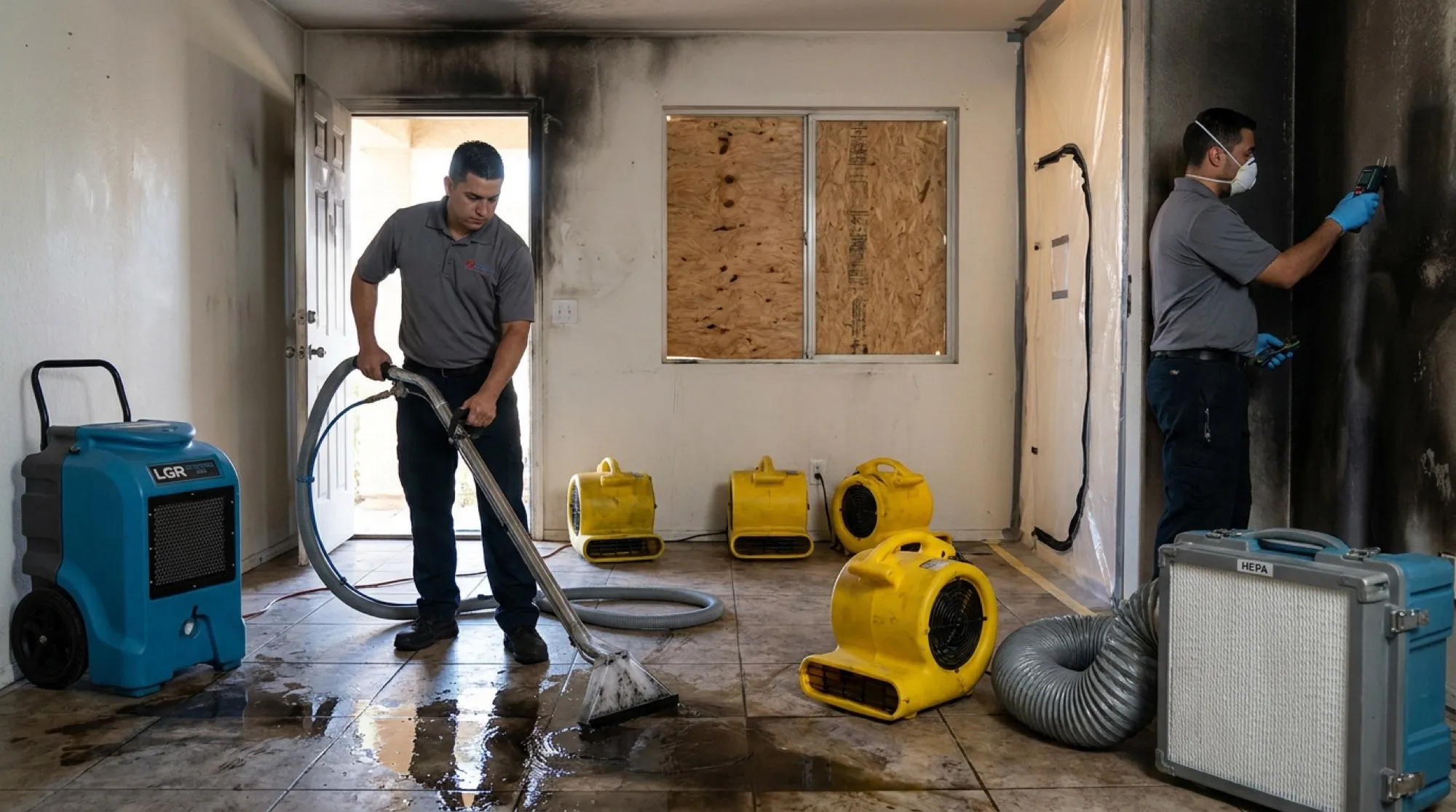
The fire department left an hour ago. Part of your house is burned, more of it is black, and all of it is soaked. Somebody handed you a card and told you to call your insurance company in the morning.
Here's what happens next, in order — and what has to happen fast.
The Thing Nobody Tells You About Fire Damage
The fire causes the damage you can see. The water and smoke cause most of the damage you'll actually pay to repair.
Suppressing a kitchen fire can put hundreds of gallons into a house in minutes. That water goes everywhere fire didn't — down through ceilings into rooms below, under cabinets, into wall cavities, through subfloor into joists. Left alone, it does exactly what any water loss does: wicks up drywall, warps flooring, and starts growing mold in 24 to 48 hours. In a Phoenix summer, the house holding heat accelerates all of it.
Smoke does its own damage on a separate timeline. Soot residue is acidic. Within hours it etches glass and stains grout. Within days it corrodes metal fixtures, appliance housings, and wiring. Left for weeks, surfaces that could have been cleaned have to be replaced instead.
Which is why the fire restoration company you want is one that treats water like the emergency it is. That's what we do every day.
Day One: Securing the Property
Before anything gets cleaned, the building has to be closed and safe.
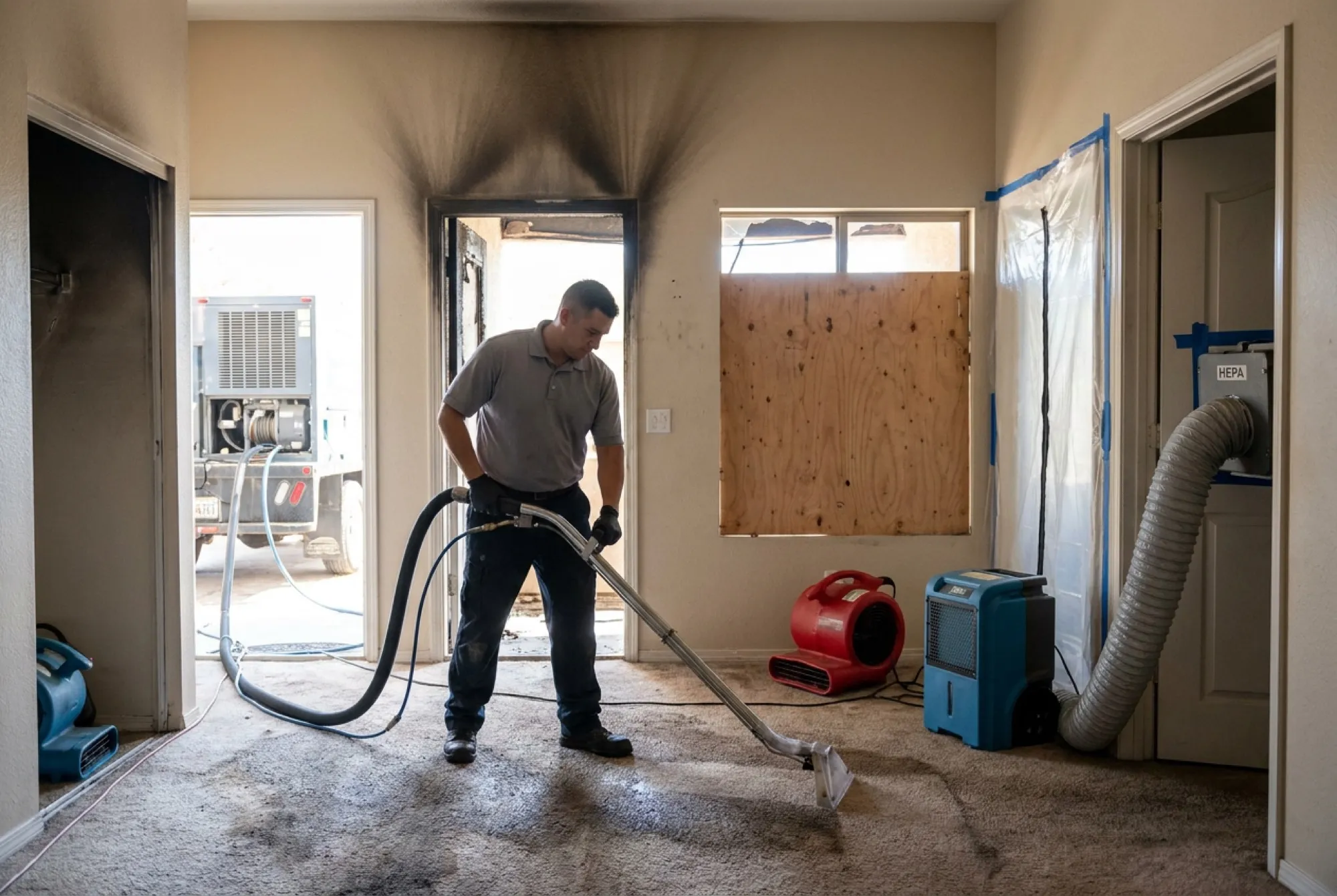
Board-up and tarping come first — broken windows, burned-through roof sections, and doors that no longer lock. An open structure invites weather, animals, and theft, and insurance carriers expect the property to be protected as a condition of the claim.
Then water extraction starts, because it's already been sitting for hours. Standing water out, saturated materials identified, drying equipment placed. This is the step most commonly delayed while everyone waits for an adjuster — and the delay is what turns a fire claim into a fire-and-mold claim.
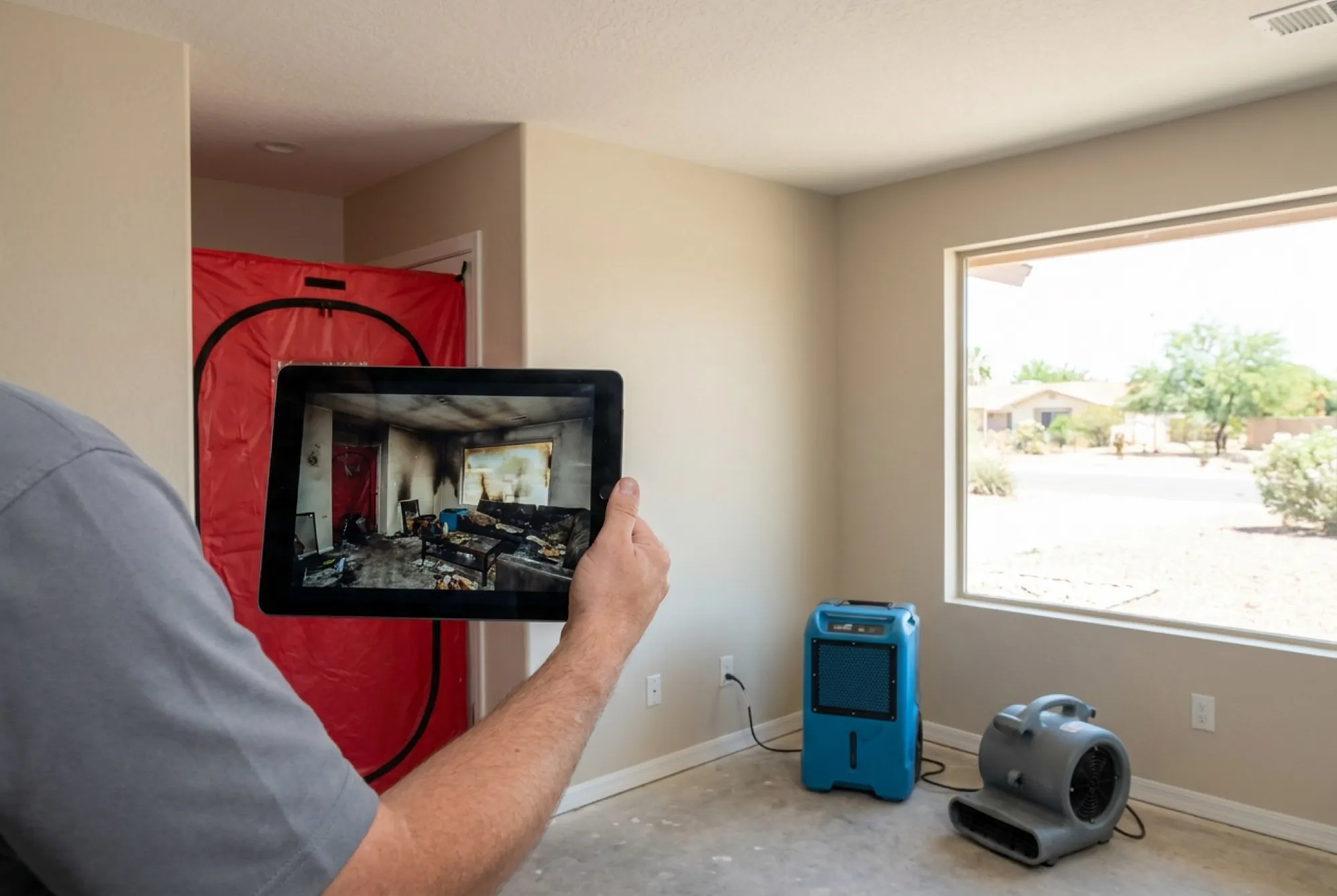
We also document everything before anything moves: photos, video, moisture readings, and an inventory of visibly affected contents. Fire claims are large, and the file you build in the first 48 hours determines how the rest of it goes.
Week One: Water and Soot
Structural drying runs on the same standards as any water loss — air movers and dehumidifiers placed to a moisture map, daily readings, equipment stays until the numbers say dry.
Soot cleaning runs in parallel and depends on what burned. Protein residue from a kitchen fire is nearly invisible, greasy, and carries an odor that outlasts everything else. Dry soot from paper and wood is powdery and cleans differently. Synthetic soot from plastics and electronics smears if you use the wrong method, and it's the most likely to permanently stain. We match the cleaning method to the residue rather than washing everything the same way, because using the wrong approach on synthetic soot sets it permanently.
Odor is treated as its own problem, not a byproduct. Smoke penetrates porous materials — drywall, insulation, framing, carpet, upholstery. Surface cleaning without addressing penetration produces a house that smells fine for two weeks and then doesn't. Depending on scope, treatment includes HEPA filtration, thermal fogging, hydroxyl or ozone generation in unoccupied spaces, and sealing framing where residue can't be fully removed.
The Rebuild
Once the structure is dry, clean, and odor-free, rebuilding is standard construction work — and it's the same crew.
Framing repair and replacement where fire damage compromised structure. Drywall, texture-matched to the rest of the house. Insulation replaced (fire-damaged insulation holds odor permanently and never gets "cleaned"). Electrical coordination where heat reached wiring. Flooring, cabinetry, trim, paint. Roof coordination when the fire or the fire department opened it.
Because mitigation and rebuild are one company, the transition doesn't have a seam in it. There's no gap between "restoration finished" and "contractor available," no second estimate to reconcile with your adjuster, and no arguing over which company is responsible for something that got missed.
Contents and Belongings
Not everything is structure. Fire claims involve the things inside, and they're handled deliberately.
Salvageable contents are cleaned — hard goods, dishware, furniture, and often more electronics than people expect. Textiles and soft goods go out for specialized cleaning where the residue type allows it. Items that can't be restored are documented and inventoried for your claim, which matters more than it sounds: an itemized, photographed contents list is the difference between a fair settlement and a fight.
Documents, photographs, and irreplaceable items get flagged first and handled separately. Tell us what they are when we arrive, before anything is moved.
What It Costs & How Insurance Works
Fire losses vary more than any other job we do. A contained kitchen fire with smoke through part of the house and firefighting water below is a full-rebuild scope, and larger structural fires run well past that. Smoke-only events — a furnace puff-back, an unattended pot with no flame spread — are a much smaller job.
Fire is a covered peril under essentially every homeowner policy, including the water damage caused by suppression. Fire claims are also the most documentation-heavy claims in this industry, and the most likely to involve an adjuster negotiating scope line by line. We bill carriers directly, write in the estimating format adjusters use, and provide the photo and moisture documentation that supports the scope. The estimate you receive is the estimate they receive.
One honest note: you are not required to use the restoration company your carrier suggests. In Arizona the choice is yours.
Common Questions
Is the water damage really covered under a fire claim?
Yes. Water used to suppress a covered fire is part of the covered loss. That includes what firefighters put into the structure and any resulting damage to rooms below.
How soon can we go back inside?
The fire department clears the structure for safety, but "structurally safe" isn't "habitable." Soot, particulates, and moisture usually make a fire-damaged home unsuitable to occupy until cleaning and drying are complete. Most policies include loss-of-use coverage for temporary housing.
Can smoke smell actually be removed, or does it always come back?
It can be removed completely — but only if penetration is addressed rather than just surfaces. Odor that returns weeks later means porous materials were cleaned on the surface and never treated or replaced.
Do I have to throw out everything that smells like smoke?
No. Hard goods, many textiles, and a lot of electronics restore successfully. What gets discarded is documented and inventoried for the claim rather than quietly hauled away.
Why do you start extracting water before the adjuster comes out?
Because carriers expect mitigation to begin immediately — delaying and letting mold develop can create an uncovered secondary loss. We document exhaustively before and during, which is what the adjuster actually needs.
What's a puff-back?
A furnace or water heater misfire that sprays oily soot through the ducts and across the house with no visible fire. Common in older Valley systems, and deceptively damaging — the residue is fine, greasy, and gets everywhere the air went.
How long does the whole process take?
Emergency board-up and extraction: day one. Drying and soot cleaning: one to three weeks depending on scope. Rebuild: weeks to a few months for major structural work. You get a schedule at the estimate and one point of contact throughout.
Will you work directly with my insurance company?
Yes — direct billing, adjuster communication, and documentation in the format carriers process. You handle filing the claim; we handle the rest of the paperwork.
Do you handle both the cleanup and the rebuild?
Yes. That's the whole point of how we're set up — one licensed team from board-up through the final walkthrough. Same as our water damage restoration process.